Overview
Modern enterprises operate with data scattered across multiple systems—ERP platforms managing financial and operational data, CRM systems tracking customer relationships, operations systems monitoring production and logistics, HR systems managing workforce data, and countless other specialized applications. While each system provides valuable insights within its domain, executives struggle to get a unified view of business performance. They're forced to log into multiple systems, reconcile conflicting data, and manually synthesize information from different sources to make strategic decisions. This fragmentation creates several critical problems: delayed decision-making, inconsistent data leading to poor choices, inability to see cross-functional impacts, and wasted time on data gathering rather than analysis.
The challenge is compounded by the fact that different executives need different views of the same data. A CEO needs high-level strategic KPIs and trends. A CFO needs detailed financial metrics and forecasts. A COO needs operational efficiency metrics and capacity utilization. A CMO needs customer acquisition costs and marketing ROI. Each role requires a different lens on the business, but traditional BI solutions often provide generic dashboards that don't match any role's specific needs.
Data quality and consistency are also major challenges. When data is spread across multiple systems, inconsistencies arise from different update frequencies, varying data definitions, and synchronization delays. An executive might see different revenue numbers in the ERP system versus the CRM system, leading to confusion and mistrust in the data. Without a single source of truth, executives can't make confident decisions.
Real-time visibility is increasingly critical in today's fast-paced business environment. Market conditions change rapidly, customer preferences shift, and operational issues can escalate quickly. Executives need current information, not yesterday's data. Traditional reporting cycles that provide weekly or monthly updates are too slow for modern decision-making needs.
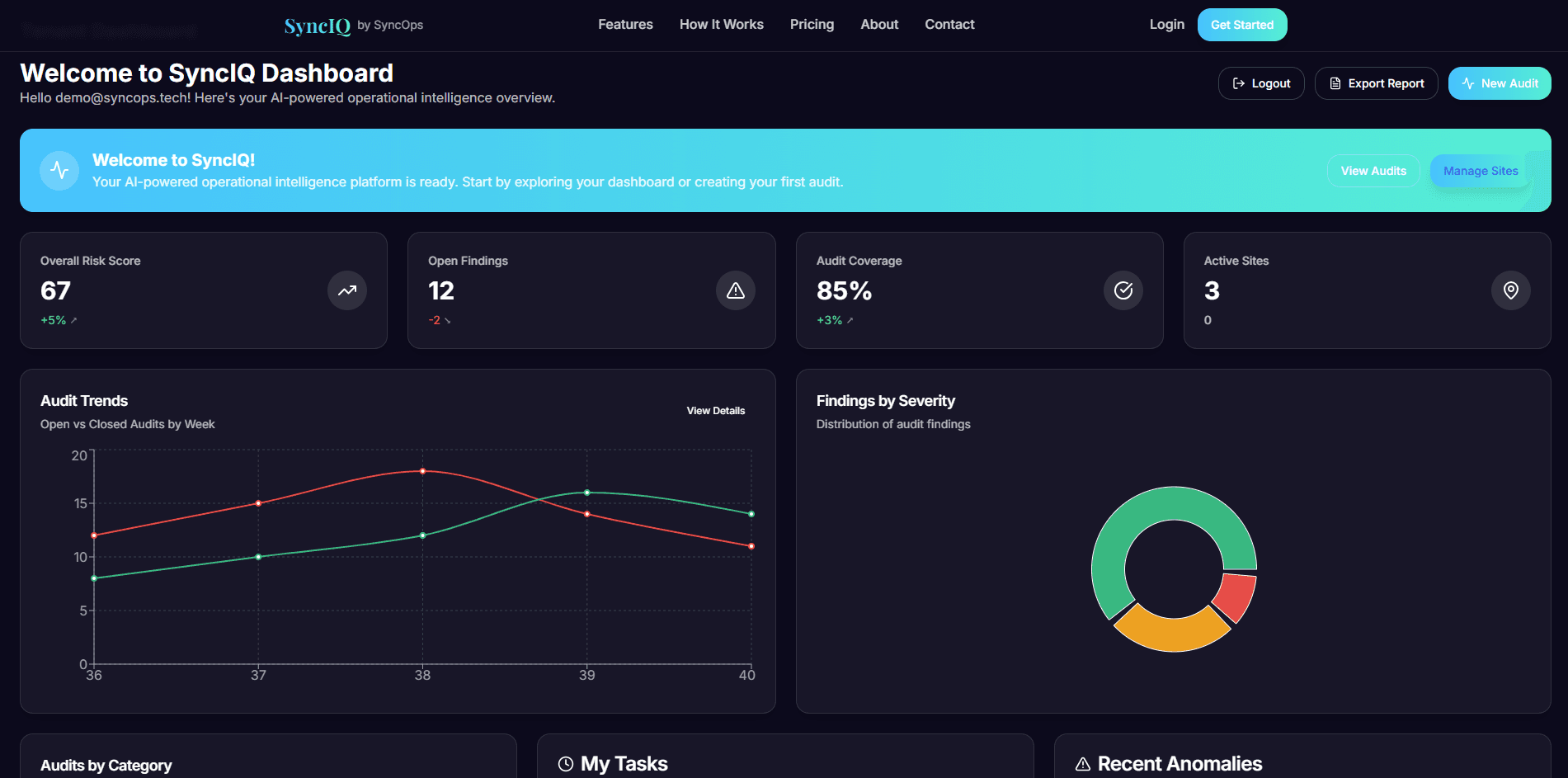
SyncIQ's Executive BI Dashboards address these fundamental challenges by aggregating data from all enterprise systems into a unified platform that provides role-based views tailored to each executive's specific needs. The system creates a single source of truth by integrating data from ERP, CRM, operations systems, and other sources, ensuring consistency and accuracy across all dashboards.
The platform's role-based approach recognizes that different executives need different information. CEO dashboards focus on high-level strategic metrics: revenue growth, profitability trends, market share, and key strategic initiatives. CFO dashboards dive deep into financial performance: P&L statements, cash flow, budget variances, and financial forecasts. COO dashboards emphasize operational efficiency: production metrics, capacity utilization, supply chain performance, and quality indicators. Each role gets a dashboard optimized for their specific decision-making needs.
The system provides real-time updates as transactions occur in source systems, ensuring that executives always have current information. This real-time capability enables proactive management—identifying issues as they develop rather than discovering them in monthly reports. Executives can see the impact of decisions immediately, enabling faster course corrections and more responsive management.
Actionable insights are a core feature of SyncIQ dashboards. Rather than just presenting data, the system highlights trends, identifies anomalies, and suggests actions. For example, a dashboard might highlight that customer acquisition costs are rising and suggest investigating marketing channel efficiency. This transforms dashboards from passive reporting tools into active decision-support systems.
Drill-down capabilities allow executives to move from high-level KPIs to detailed analysis. If a CEO sees declining profitability, they can drill down to see which product lines, regions, or customer segments are driving the decline. This enables executives to quickly identify root causes and take targeted action.
By providing unified, role-based, real-time dashboards with actionable insights, SyncIQ enables faster decision-making, better strategic planning, and improved business performance. Executives spend less time gathering data and more time analyzing it, leading to better decisions and more effective management.
How it works
- Integrates data from multiple sources (ERP, CRM, operations)
- Creates role-based dashboards for different executive roles
- Focuses on key performance indicators and actionable metrics
- Provides real-time updates and alerts
- Enables drill-down analysis for deeper insights
Benefits
- Single source of truth across all systems
- Faster decision-making with real-time insights
- Role-appropriate views for different executives
- Better strategic planning
- Improved operational visibility
Implementation/Checklist
- Identify data sources and integration points
- Define role-based dashboard requirements
- Configure KPIs and metrics for each role
- Set up real-time data pipelines
- Train executives on dashboard usage
- Establish alert thresholds and escalation
FAQ
How often is data updated?
Data is updated in real-time as transactions occur in source systems, ensuring executives always have current information.
Can dashboards be customized?
Yes. Dashboards can be customized for each executive role, showing only the metrics and insights relevant to their responsibilities.